If you have ever come across the word “bilieter” and found yourself typing it into a search bar wondering what on earth it means, you are far from alone. It is one of those words that sits just outside everyday vocabulary in most English-speaking countries, yet it carries a long and surprisingly practical history in the world of tickets, travel, and public events. A bilieter, at its core, refers to a person or system responsible for issuing, checking, or validating tickets, and understanding this term opens a small window into how ticketing itself has evolved over the past two centuries.
This guide breaks the word down completely: where it comes from, what a bilieter actually does, how the role has changed with digital ticketing, and why the concept still matters in 2026 even as automation takes over much of the job. Whether you stumbled on the term by accident or you are researching it for language, travel, or event-industry reasons, by the end of this article you will have a clear, complete picture.
What Does Bilieter Mean?
A bilieter is generally understood as a person who handles tickets, most commonly by checking, validating, or collecting them at the point of entry to a train, bus, cinema, theater, concert, or sporting event. In plainer terms, if you have ever handed your ticket to someone standing at a gate or turnstile, or watched a uniformed attendant scan a barcode before waving you through, that person was performing the job of a bilieter.
The word does not appear in most major English dictionaries, which is part of why it confuses so many people who encounter it. It is far more common in continental Europe, particularly in French-influenced regions and parts of German-speaking Switzerland, Poland, and Eastern Europe, where variations of the term have long been used to describe ticket inspectors and ticket-office staff. English speakers are more likely to recognize the related word “billet,” which historically meant a written note, an official document, or a ticket.
Because the term straddles several languages and has drifted slightly in meaning depending on the country and industry, you will find it used in two closely related ways:
- As a human role: someone employed to sell, issue, or check tickets in person, often at a transit station, cinema, or event venue.
- As a broader concept tied to a system: the entire process and infrastructure around producing, distributing, and validating tickets, whether paper-based or digital.
Both interpretations point back to the same core idea, which is managing controlled access through proof of purchase or authorization.
Where the Word Comes From
The root of bilieter traces back to the French word “billet,” meaning a short written note, a pass, or a ticket. Billet itself has an even older history in military and administrative contexts, where it referred to an official document assigning soldiers to lodging in a civilian home during wartime, a practice known as billeting. Over time, as organized public transport and entertainment venues developed across Europe in the 19th and 20th centuries, the word evolved to describe not just the ticket itself but the person responsible for managing it.
This linguistic journey explains why the term feels a bit foreign to native English speakers today. It grew up in French, spread into German and Slavic languages through cross-border trade and travel, and picked up slightly different shades of meaning in each region. In Switzerland, where French and German are both widely spoken, the crossover between “billet” and its Germanic cousin helped cement bilieter as a recognizable job title for conductors and ticket inspectors on trains and trams. In Poland and parts of Eastern Europe, similar terms are still used informally to describe transit staff who check passenger tickets.
Understanding this backstory matters because it shows that bilieter is not a made-up internet buzzword. It is a genuine, if regionally specific, occupational term with roots stretching back well over a century, and its meaning has simply never fully crossed over into mainstream English usage.
The Traditional Role of a Bilieter
Historically, a bilieter performed a very hands-on, people-facing job. Picture a train conductor walking down the aisle of a carriage, checking each passenger’s ticket and punching a small hole to confirm it had been used. Or imagine an usher standing at the entrance of an old cinema, tearing a paper ticket in half before letting a moviegoer find their seat. These were the everyday duties of a bilieter, and the role carried real responsibility.
Before automated systems existed, ticket fraud and unauthorized entry were common headaches for transport operators and venue owners. A sharp-eyed bilieter was often the only line of defense against counterfeit tickets, expired passes, or people simply trying to sneak in without paying. Beyond enforcement, the role also had a strong customer service dimension. Passengers and guests frequently had questions about seating, schedules, or pricing, and the bilieter was usually the first person they turned to for help.
This dual responsibility, part gatekeeper and part guide, made the job more demanding than it might sound at first. A good bilieter needed patience, attentiveness, and the ability to defuse the occasional dispute over a lost or misplaced ticket, all while keeping lines moving during busy periods like rush hour or a sold-out show.
Bilieter in Theaters, Trains, and Public Venues
The exact duties of a bilieter shifted slightly depending on the setting, even though the underlying purpose stayed the same.
In theaters and cinemas, a bilieter typically stood at the entrance, checked or tore tickets, and often helped direct guests to their seats, especially in venues with assigned seating. During busy premieres or sold-out performances, this role became essential for keeping the flow of people orderly and preventing overcrowding near the doors.
On trains, trams, and buses, the bilieter role blended into what English speakers would call a conductor or ticket inspector. This person moved through the vehicle checking tickets or passes, sold tickets to passengers who had not yet purchased one, and occasionally issued fines to those traveling without valid proof of payment. In many European transit systems, this remains a recognizable job today, even if the title used varies by country.
At larger public events such as concerts, festivals, and sports matches, bilieters worked in teams stationed at multiple entry points, scanning or checking large volumes of tickets in short windows of time. This is where the job became closer to modern crowd management, requiring coordination with security staff and event organizers to keep entry lines efficient.
How Digital Ticketing Changed the Bilieter’s Job
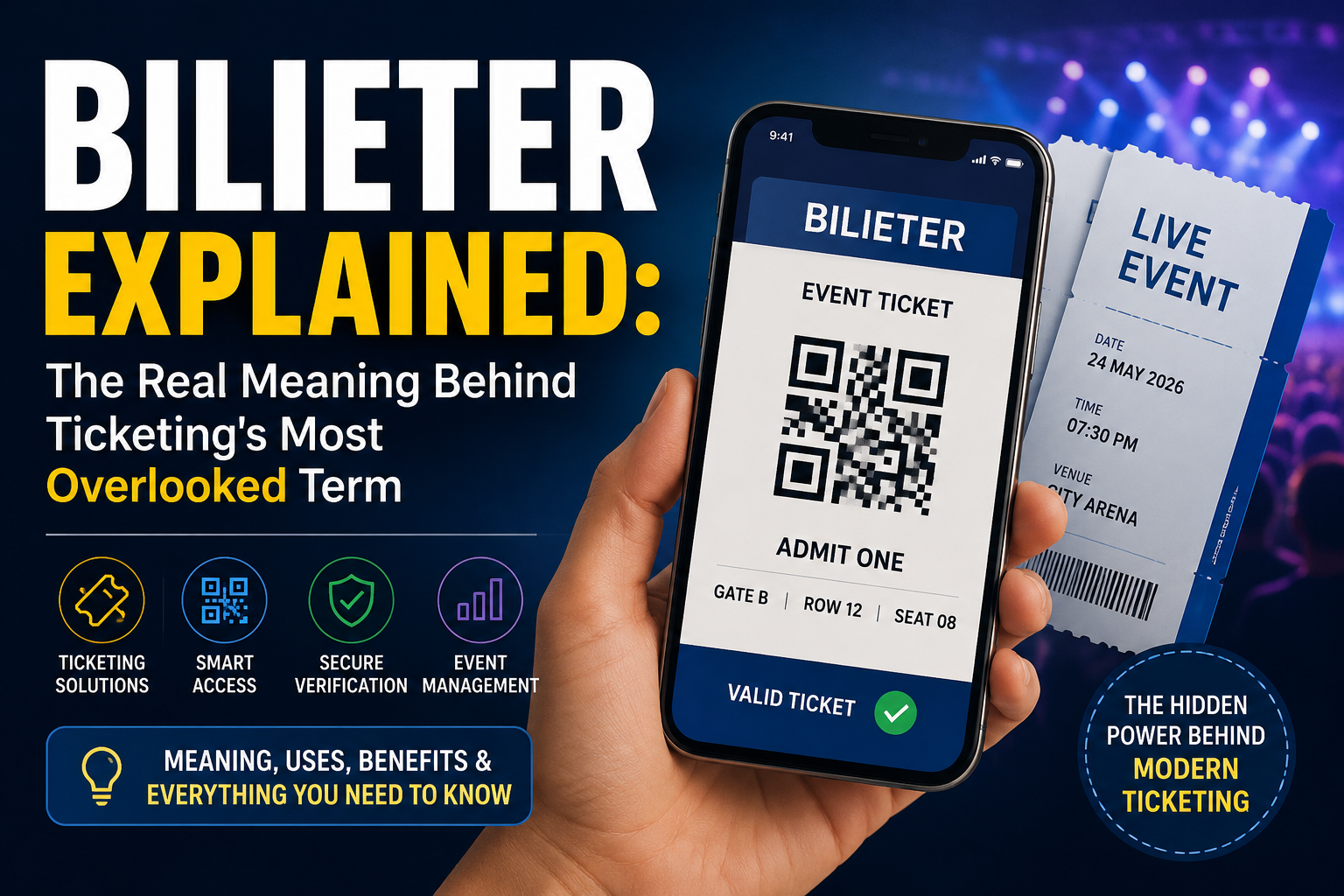
The rise of digital ticketing over the past two decades has reshaped almost every aspect of how tickets are bought, checked, and validated, and the bilieter role has changed right along with it. Paper tickets with tear-off stubs have largely given way to QR codes, barcodes, and mobile passes stored directly on a smartphone. Instead of manually inspecting a paper ticket, today’s bilieter, where the role still exists as a human position, is far more likely to be holding a handheld scanner that instantly confirms whether a code is valid.
This shift has brought real benefits. Digital systems dramatically reduce the risk of counterfeit tickets, since each code is typically tied to a unique, verifiable database entry that cannot be easily duplicated. Entry lines move faster because scanning takes a fraction of the time that manual inspection once did. Event organizers also gain access to real-time data, such as how many attendees have already entered and when, which helps with everything from staffing decisions to emergency planning.
At the same time, the shift has not eliminated the human element entirely, and this is a point worth emphasizing because a lot of thin content online oversimplifies it. Even the most advanced scanning systems occasionally fail, whether due to a dead phone battery, a corrupted barcode, or a network outage at the venue. When that happens, someone still needs the judgment and authority to manually verify a guest’s identity against a booking record, which is exactly the kind of situation where an experienced person in the bilieter role earns their keep. Technology has changed the tools, but it has not fully replaced the need for a trained human presence at many venues.
Bilieter as a Person Versus Bilieter as a System
One source of confusion around this term is that it now gets used to describe two different things, and mixing them up leads to a lot of the muddled explanations you will find scattered across the web. The table below lays out the distinction clearly.
| Aspect | Bilieter (the Person) | Bilieter (the System) |
|---|---|---|
| What it refers to | A human employee who checks, sells, or manages tickets | A digital or organizational framework that handles the full ticket lifecycle |
| Where you find it | Train platforms, cinemas, theaters, stadium entrances | Online booking platforms, event management software, transit apps |
| Core function | Verifying tickets, assisting guests, enforcing entry rules | Issuing, tracking, and validating tickets automatically |
| Skills involved | Customer service, attentiveness, conflict resolution | System design, data security, scalability |
| Modern relevance | Still needed for exceptions, disputes, and accessibility support | Increasingly the primary method of ticket control worldwide |
Seeing the two side by side makes it obvious why so many articles about this word feel scattered. They are often trying to describe both meanings at once without clearly separating them, which leaves readers unsure whether they are learning about a job or a piece of technology. In reality, both are valid, and both trace back to the same French root, just applied to different eras of ticketing.
Why the Term Still Matters in 2026
You might reasonably ask why a somewhat obscure, regionally rooted word deserves attention today, especially with ticketing now dominated by apps, QR codes, and automated gates. The answer comes down to a few practical reasons.
First, the global events industry has not become fully automated, and it likely never will. Concerts, festivals, sports matches, and theater productions still rely on trained staff to manage entry points, especially for large crowds where a purely automated system could create bottlenecks or safety risks during a rush. The bilieter’s traditional skill set, reading a situation quickly, staying calm under pressure, and helping confused or distressed guests, remains genuinely valuable.
Second, accessibility depends heavily on having real people available. Not every guest can navigate a self-service kiosk or a smartphone app easily, whether due to age, disability, unfamiliarity with technology, or simply a language barrier at an international event. A human bilieter, or whatever title a venue gives that role locally, often provides the only practical way for these guests to enter smoothly and with dignity.
Third, understanding this term gives useful context for anyone working in travel, hospitality, or event management across Europe, where variations of the word still appear in job postings, staff training materials, and internal documentation. Recognizing the term, rather than being thrown off by it, can be a small but genuinely useful piece of industry knowledge.
Finally, from a purely linguistic standpoint, tracing a word like bilieter back through its French, German, and Slavic pathways is a neat example of how language adapts to reflect real-world needs. As ticketing technology keeps evolving, it is likely that new terms will emerge to describe hybrid roles that blend human judgment with automated systems, and bilieter offers a useful historical anchor for understanding how that kind of evolution tends to happen.
The Future of Ticket Checking and What It Means for the Bilieter Role
Looking ahead, ticketing technology is trending toward even greater automation, with facial recognition entry, fully contactless gates, and blockchain-based ticket verification already being piloted at select venues around the world. These systems promise faster entry and even tighter fraud prevention. However, industry experience so far suggests that fully removing human oversight tends to create new problems even as it solves old ones, particularly around accessibility, dispute resolution, and handling the unexpected technical failures that any system will eventually experience.
The most likely outcome, based on how similar transitions have played out in retail and banking, is a hybrid model. Most guests will use self-service, automated entry for routine, trouble-free access, while trained staff, carrying the same responsibilities that a traditional bilieter once held, remain on hand for exceptions, complaints, and situations requiring a human decision. In that sense, the role is not disappearing so much as narrowing and becoming more specialized, focused less on routine ticket checking and more on judgment calls that machines still cannot reliably make.
For anyone in the ticketing, travel, or event management space, keeping an eye on this shift is worthwhile. The venues and transit systems that get the balance right, blending fast automated entry with accessible human support, are the ones most likely to deliver a smooth guest experience as the technology continues to mature.
Final Thoughts on Bilieter
At its heart, the word bilieter describes something simple and enduring: the human and systemic effort behind making sure the right people get into the right place with a valid ticket. Its French roots in “billet” connect it to centuries of organized travel and entertainment, while its modern usage stretches to cover the digital platforms now handling millions of ticket transactions every day. Whether you encounter it describing a uniformed conductor checking passes on a European train or a backend ticketing system powering an online box office, the underlying purpose has not really changed.
As automation continues to reshape how tickets are bought and checked, the traditional bilieter role is adapting rather than vanishing, shifting toward the kind of judgment-based, guest-facing work that technology still cannot fully replicate. Understanding this term, its history, and its modern relevance gives you a clearer picture of an industry that touches nearly everyone at some point, whether you are catching a train, watching a film, or heading into a sold-out concert.
Frequently Asked Questions About Bilieter
Is bilieter an official English word found in dictionaries? No, bilieter is not typically listed in standard English dictionaries. It is more commonly documented in French-influenced and Central European contexts, where it describes a ticket checker or ticket-related role, and its usage has gradually spread into broader online discussion.
What is the difference between a bilieter and a ticket agent? A ticket agent generally focuses on selling tickets, often from a booth or counter before an event or journey begins. A bilieter’s traditional role centers more on checking and validating tickets at the point of entry, though in practice the two responsibilities frequently overlap, especially in smaller venues or transit systems.
Do bilieters still exist now that most tickets are digital? Yes, though the job has changed significantly. Instead of manually inspecting paper tickets, many people in bilieter-type roles today use handheld scanners to verify QR codes or barcodes, and they remain essential for handling technical issues, accessibility needs, and disputes that automated systems cannot resolve on their own.
Is bilieter the same as an usher? They are related but not identical. Ushers primarily focus on guiding guests to their seats and maintaining order inside a venue, while a bilieter’s core responsibility centers on verifying that a ticket is valid before allowing entry in the first place.
Where is the term bilieter most commonly used today? It shows up most often in discussions tied to French-speaking regions, German-speaking Switzerland, Poland, and other parts of Eastern Europe, where variations of the word have long described transit staff and venue attendants responsible for ticket control.