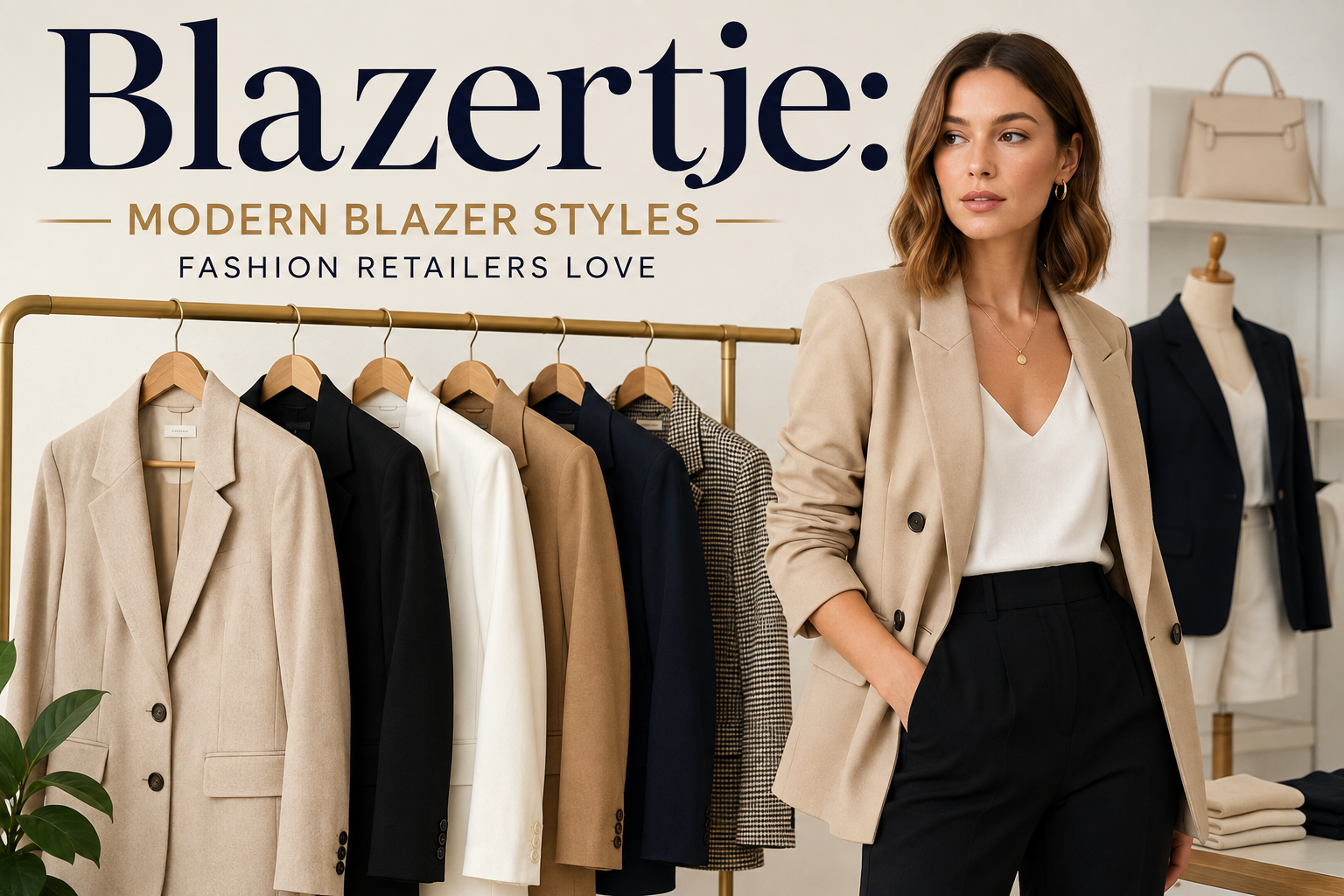
A great blazer does more than complete an outfit. It can turn a basic T-shirt and jeans into a polished look, add structure to a dress, and give customers a dependable layer they can wear from work to dinner. That is exactly why Blazertje is gaining attention in modern fashion conversations. The term is commonly associated with a lighter, softer, more approachable interpretation of the classic blazer, making it especially interesting for retailers looking for versatile pieces that fit today’s less rigid approach to dressing.
For U.S. fashion retailers, the opportunity is not simply to stock another blazer. It is to offer a jacket that combines tailoring with comfort, everyday wearability, and contemporary styling. Current fashion coverage continues to highlight softer and more relaxed blazer silhouettes as shoppers look for pieces that feel polished without looking overly formal.
This guide explains what a Blazertje is, why customers are interested in the style, which designs and fabrics make sense for a retail collection, how to position Blazertje products, and what fashion buyers should consider when sourcing them for the U.S. market.
Table of Contents
- What Is a Blazertje?
- Blazertje Meaning and Fashion Origin
- Why Blazertje Is Different From a Traditional Blazer
- Why Customers Want Blazertje Styles
- Best Blazertje Styles for Fashion Retailers
- Choosing the Right Fabrics
- How Fit Influences Blazertje Sales
- Blazertje Colors That Work in Retail
- How to Style Blazertje for Different Customers
- Why Blazertje Works for U.S. Fashion Retail
- How Retailers Should Merchandise Blazertje
- Wholesale Buying Considerations
- How to Build a Strong Blazertje Collection
- Blazertje Marketing Ideas
- Common Retail Mistakes to Avoid
- FAQs
- Conclusion
What Is a Blazertje?
Blazertje is a fashion term commonly used to describe a smaller, lighter, softer, or more approachable version of a traditional blazer. The word comes from Dutch, where the diminutive suffix “-tje” gives the idea of something smaller or more delicate. In fashion usage, it has developed into a useful description for blazer styles that retain tailoring while offering a more relaxed everyday feel.
The important point for retailers is that a Blazertje does not need to look miniature. The concept is more about proportion, construction, comfort, and styling. A Blazertje can be cropped, softly tailored, relaxed, boxy, lightweight, or minimally structured.
That flexibility makes the category commercially interesting. Customers who do not normally wear traditional suit jackets may feel more comfortable buying a relaxed blazer that works with jeans, sneakers, dresses, trousers, or casual tops.
Blazertje Meaning and Fashion Origin
The linguistic background gives the term its character. In Dutch, adding “-tje” commonly creates a diminutive form, so blazertje can literally be understood as “little blazer.” Fashion publications and websites discussing the term generally connect it with a lighter, more casual interpretation of traditional tailoring.
But the commercial meaning is more useful than the literal translation.
For a fashion retailer, Blazertje represents the idea of tailoring without excessive formality. It takes familiar blazer elements such as lapels, buttons, sleeves and pockets and adapts them to modern wardrobes.
This matters because customers increasingly expect clothing to work across multiple situations. A jacket that only works with formal trousers has a narrower selling opportunity than one that can be styled with denim, knitwear, skirts and casual footwear.
Why Blazertje Is Different From a Traditional Blazer
Traditional blazers can be structured, sharply tailored and relatively formal. They remain important in professional and occasion dressing, but not every customer wants that level of structure.
A Blazertje generally moves in the opposite direction.
It may use softer shoulders, lighter materials, less padding, shorter proportions or a more relaxed silhouette. Some versions are unlined or partially lined to reduce weight and improve comfort. Others use stretch fabrics that allow easier movement.
| Feature | Traditional Blazer | Blazertje Style |
|---|---|---|
| Overall feel | Structured and polished | Soft, relaxed and versatile |
| Fit | Often tailored | Cropped, relaxed, boxy or lightly tailored |
| Construction | More structured | Often softer or partially structured |
| Fabrics | Wool, suiting fabrics, heavier blends | Linen, cotton, lightweight wool, knit and stretch blends |
| Styling | Business, formal and smart-casual | Casual, smart-casual, workwear and occasion looks |
| Customer appeal | Customers seeking classic tailoring | Customers wanting polish with comfort |
| Retail opportunity | Core wardrobe staple | Versatile fashion-forward layer |
The distinction should not be treated as an absolute rule. A Blazertje can still be tailored, elegant and sophisticated. The difference is that the design usually prioritizes wearability and flexibility alongside structure.
Why Customers Want Blazertje Styles
The strongest selling point is simple: customers can wear the same jacket in more situations.
A shopper might wear a lightweight Blazertje with jeans during the day, pair it with tailored trousers for work, and then use it with a dress for dinner. That kind of versatility increases the perceived value of the purchase.
Modern shoppers also tend to be more selective about wardrobe additions. A jacket that requires a specific outfit may stay in the closet. A jacket that works with multiple existing pieces has a better chance of becoming a repeat-wear favorite.
That is where retailers can position Blazertje products effectively. Instead of selling the item as merely another jacket, sell the number of outfits it can create.
Best Blazertje Styles for Fashion Retailers
A strong retail collection should not depend on one silhouette. Different customers respond to different proportions, and a well-planned assortment gives shoppers a reason to compare styles.
Cropped Blazertje
The cropped version is particularly useful for customers who want a modern silhouette. It can work well with high-waisted trousers, wide-leg pants, skirts and dresses.
For retailers, cropped styles can add a fashion-forward option without requiring an unusual garment construction.
The key is proportion. A cropped jacket should look intentionally designed rather than simply shortened.
Relaxed Blazertje
The relaxed version appeals to customers who prioritize comfort. A slightly oversized cut can create an effortless look when paired with fitted trousers, denim or a simple top.
This silhouette is also useful for customers who prefer layering.
Single-Breasted Blazertje
Single-breasted designs are among the easiest styles to merchandise because they can appeal to both classic and contemporary shoppers.
A clean single-button or two-button design can create a streamlined appearance while keeping the garment easy to style.
Double-Breasted Blazertje
Double-breasted designs provide more visual impact. They can give a softer jacket additional structure and create a stronger fashion statement.
Retailers should consider fabric carefully with this silhouette because excessive weight can make the garment feel too formal or heavy for the Blazertje concept.
Collarless Blazertje
The collarless blazer is another contemporary direction worth watching. Current 2026 fashion coverage has highlighted collarless blazers as a modern alternative to conventional blazer shapes, particularly when styled with denim and other casual pieces.
For retailers, this creates an opportunity to offer something familiar but visually different.
Choosing the Right Fabrics for Blazertje
Fabric can determine whether a blazer feels premium, comfortable, seasonal or inexpensive.
For a lightweight Blazertje collection, linen and linen blends can be particularly useful during warmer months. They create a relaxed texture and naturally support casual styling.
Cotton offers another strong option. Cotton twill can provide structure without feeling as formal as traditional suiting fabrics.
Lightweight wool can work well when a retailer wants a more elevated product. Tropical wool and breathable wool blends can create a polished appearance while remaining suitable for versatile styling.
Stretch blends are useful for customers who want greater movement. A small amount of stretch can make a significant difference in comfort, particularly when the jacket is intended for long workdays or travel.
Knitted blazer fabrics can move the product even further toward casualwear. They can be especially appealing to shoppers who normally avoid structured jackets.
How Fit Influences Blazertje Sales
Fit is one of the most important commercial considerations when buying blazers.
A beautiful fabric cannot compensate for poor proportions.
The shoulders should sit correctly, the sleeves should have a purposeful length, and the body should provide enough room for comfortable movement without looking careless.
Retailers should also think beyond a single ideal body shape. A broader size range can create a stronger commercial opportunity because blazer fit is highly personal.
For online retailers, detailed measurements become even more important. Customers need enough information to understand how the jacket will sit on the shoulders, chest, waist and sleeves.
Research into fashion e-commerce has repeatedly identified fit and sizing as major challenges because poor fit can contribute to returns and customer dissatisfaction.
For that reason, accurate garment measurements, model information and clear fit descriptions are not minor details. They are part of the selling strategy.
Blazertje Colors That Work in Retail
Color selection should balance timeless demand with enough variation to make the collection visually interesting.
Navy is a dependable choice because it can replace traditional black in many outfits while feeling slightly softer.
Black remains essential for customers who want a versatile wardrobe staple. It can move from office dressing to evening styling with minimal effort.
Cream, beige and stone can give a collection a lighter premium appearance, especially in spring and summer.
Gray provides another useful neutral for customers who prefer understated tailoring.
Once the core neutrals are covered, retailers can introduce seasonal colors. Muted green, burgundy, chocolate brown, soft blue or carefully selected checks can create visual interest without making the collection difficult to merchandise.
How to Style Blazertje for Different Customers
A major strength of Blazertje fashion is its ability to serve different customer groups.
For professional customers, pair a structured Blazertje with tailored trousers and a clean blouse or shirt. The result looks polished without requiring a complete traditional suit.
For smart-casual shoppers, denim is one of the easiest combinations. A relaxed blazer over a simple T-shirt can instantly make the outfit look more intentional.
For women seeking an elegant evening look, a cropped or collarless Blazertje can work over a dress or with refined trousers.
For men, a softer blazer can be paired with chinos, dark denim, knit polos or casual shirts.
The retailer’s job is to demonstrate these possibilities visually. Customers should be able to see immediately that the product is not restricted to one occasion.
Why Blazertje Works for U.S. Fashion Retail
The U.S. market is particularly suitable for versatile blazer merchandising because American wardrobes often mix formal and casual pieces.
A customer may wear sneakers with tailored trousers, denim with a blazer, or a T-shirt underneath a jacket designed with traditional tailoring.
That creates a natural environment for Blazertje products.
Retailers do not need to present the category as highly formal European tailoring. Instead, they can position it around versatility, comfort, polish and everyday style.
This approach can also work across different retail formats, including boutiques, women’s fashion stores, men’s apparel stores, department-style retailers, online clothing businesses and specialty fashion shops.
How Retailers Should Merchandise Blazertje
Merchandising should communicate the product’s versatility within seconds.
Instead of placing every blazer together without context, consider building coordinated outfit stories. Show one Blazertje with denim, another with tailored trousers and another with a dress or skirt.
This makes the customer think about outfits rather than isolated products.
Color grouping can also help. Neutral Blazertjes can form the foundation of the collection, while seasonal colors and patterns create visual interest.
For online stores, product photography should include both clean product shots and lifestyle images. Buyers need to see the garment’s construction, but shoppers also need to understand how it looks when worn.
Wholesale Buying Considerations for Fashion Retailers
When sourcing Blazertje products, retailers should look beyond the wholesale price.
A low unit cost is attractive only when the finished garment meets customer expectations.
Fabric composition, stitching, lining quality, button attachment, seam finishing, pocket construction and overall shape all influence perceived value.
Retailers should also examine consistency across sizes. A garment that looks excellent in one sample size but loses its shape in larger or smaller sizes can create problems after launch.
Before placing a large order, request samples and evaluate the product as a customer would. Check how it moves, how the fabric behaves after wearing, whether the buttons feel secure, and whether the jacket maintains its shape.
A wholesale relationship should ultimately be judged by quality, reliability, communication, lead time and repeatability, not price alone.
How to Build a Strong Blazertje Collection
A retailer does not need dozens of designs to establish the category.
A focused assortment can often be more effective because customers understand the product range quickly.
A practical starting collection could include:
- One classic neutral style
- One relaxed or oversized style
- One cropped or fashion-forward silhouette
From there, colors and fabrics can expand according to customer response.
This approach also gives retailers useful sales information. If the relaxed silhouette sells faster than the structured version, future purchasing can reflect actual demand rather than assumptions.
Blazertje Marketing Ideas
Marketing should sell the lifestyle behind the garment rather than simply describing its technical features.
Instead of writing “lightweight blazer with two buttons,” show the customer what that jacket can do.
A product page could position the garment as a layer for work, travel, dinner and weekends. Social media content can demonstrate three outfits using the same jacket.
Short-form videos can show a quick transformation from casual to polished. Email campaigns can introduce seasonal colors or new fabrics.
For local fashion retailers, location-based marketing can add another layer. A boutique in New York, Los Angeles, Miami, Chicago or another U.S. market can create content around local lifestyles, weather and occasions.
The strongest message is usually not “buy this blazer.”
It is “this is the jacket you will actually wear.”
Product Descriptions That Convert Better
Retail product descriptions should answer the questions customers genuinely have.
Explain how the jacket fits, what it is made from, how heavy the fabric feels, whether it stretches, where it falls on the body, and what outfits work with it.
Avoid filling the page with vague phrases such as “ultimate fashion statement” when the customer needs practical information.
A strong description can combine emotional appeal with useful detail.
For example, a retailer might describe a lightweight linen-blend Blazertje as a polished layer designed for warm-weather dressing, then explain its relaxed fit, breathable construction, button closure and styling options.
That gives customers both the reason to want the product and the information needed to make a purchase decision.
Common Retail Mistakes to Avoid
The biggest mistake is treating every Blazertje as the same product.
A lightweight linen jacket and a structured wool blazer serve different customers and seasons.
Another mistake is ordering too many trend-driven colors before establishing demand for reliable neutrals.
Poor sizing information is another problem, especially for online retailers. Customers cannot physically try the product, so accurate measurements and fit guidance matter.
Finally, retailers should avoid selling the Blazertje only as officewear. Its strongest commercial advantage is versatility.
If customers understand that one jacket can create multiple looks, the product becomes easier to justify as a wardrobe investment.
Blazertje as a Smart Addition to a Retail Collection
The commercial potential of Blazertje comes from its position between traditional tailoring and casual fashion.
It is polished enough for professional settings but relaxed enough for everyday outfits. That gives retailers more opportunities to sell the same product across multiple customer occasions.
The style also fits naturally into capsule-wardrobe thinking. A customer does not necessarily need five formal jackets. One versatile Blazertje can work with several existing pieces.
That creates a useful selling story for retailers: buy fewer pieces, but choose pieces that work harder.
Frequently Asked Questions About Blazertje
What is a Blazertje?
A Blazertje is generally described as a lighter, softer or more relaxed interpretation of a traditional blazer. The term comes from Dutch and is commonly explained as a diminutive form of “blazer,” essentially meaning “little blazer.”
Is a Blazertje different from a blazer?
The terms overlap, but Blazertje is generally used to emphasize a more approachable interpretation of the classic blazer. It may feature softer construction, lighter fabrics, shorter proportions, relaxed fits or casual styling.
What fabrics are best for a Blazertje?
Linen, cotton, lightweight wool, knit fabrics and stretch blends can all work well. The best fabric depends on the season, price point, target customer and desired level of structure.
Can fashion retailers sell Blazertje styles year-round?
Yes. Retailers can build seasonal collections around different fabrics. Linen and cotton blends work well for warmer periods, while wool blends, heavier knits and textured fabrics can extend the category into cooler seasons.
How should retailers market Blazertje products?
Focus on versatility. Show customers how one jacket can work for professional outfits, casual denim, travel, dinners and weekend dressing. Lifestyle photography, outfit combinations and clear fit information can make the product easier to understand and buy.
Conclusion
Blazertje represents a useful evolution of the classic blazer: less rigid, easier to style and better suited to customers who want polished clothing without excessive formality.
For fashion retailers, that combination creates a strong merchandising opportunity. The product can sit between workwear, smart-casual fashion and everyday wardrobe essentials, allowing one category to reach several customer needs.
The best retail strategy is not to chase the word itself. It is to understand what customers are looking for behind it: comfortable tailoring, flexible styling, attractive proportions and clothing that earns frequent wear.
A well-selected Blazertje collection can deliver exactly that. By combining reliable neutral colors, modern silhouettes, quality fabrics, accurate sizing and strong lifestyle merchandising, retailers can turn the Blazertje trend into a practical product category rather than a short-lived fashion idea.
For U.S. fashion businesses, the opportunity is especially clear: offer customers a blazer that looks refined when they need it, feels comfortable when they want it, and works with far more of their wardrobe than a conventional formal jacket.